
Renewable Climate Workshop 1 (July 25)
Our First Renewable Climate Workshop: Learning & Building Together
Today marked a big milestone for Renewable Climate — our very first workshop, "Let's Learn & Build Together," and it could not have gone better. A room full of kids and teens spent the day thinking hard about climate change and then got their hands dirty (well, solder-y) building something real.
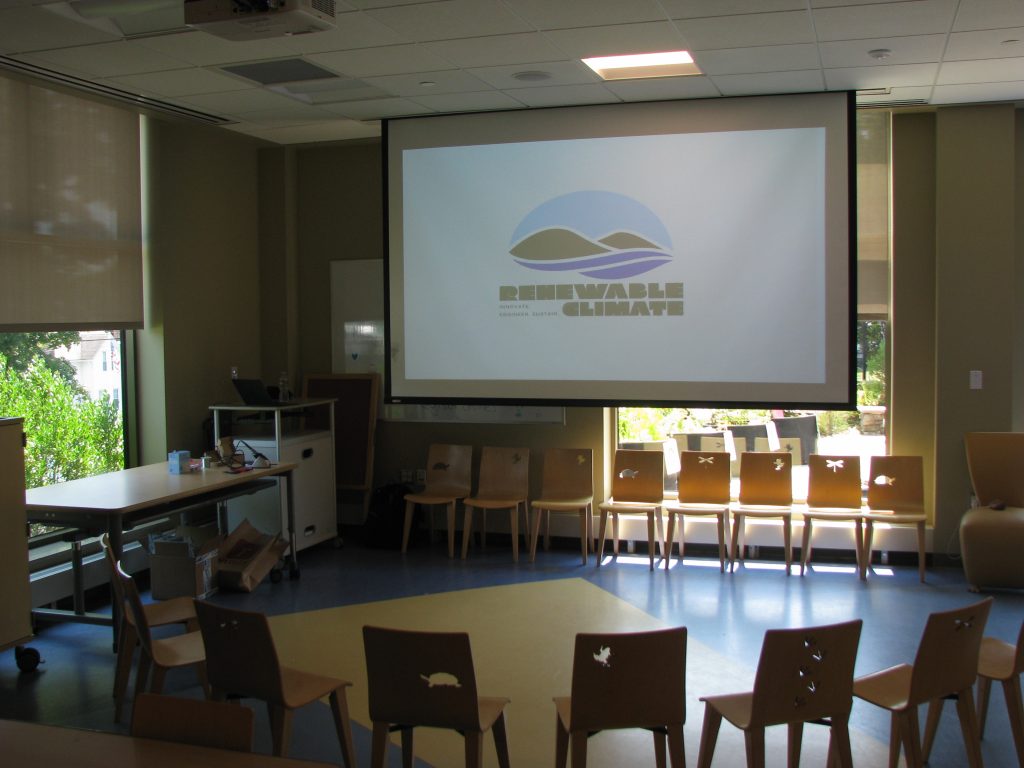
Breaking the Ice
We kicked things off with a few simple questions: What's your favorite outdoor activity? Have you noticed weird weather lately? What do you think actually causes climate change? If you could invent one machine to save the planet, what would it be? The answers were all over the place — bike rides, surprise heat waves, and a few genuinely creative planet-saving inventions — but they got everyone talking and set the tone for the rest of the day.
The Basics: What's Actually Happening
From there we walked through what climate change really is: a long-term shift in temperature and weather patterns, driven mostly by human activity — burning fossil fuels, cutting down forests, raising livestock, and all the driving and flying we do. Those activities pump greenhouse gases into the atmosphere, which trap heat and slowly warm the planet.
The numbers back it up. Earth's temperature has climbed about 1.1°C since the 1800s. The last decade was the hottest ever recorded. Arctic sea ice is shrinking roughly 13% per decade, and sea levels have risen 8 to 9 inches since 1880. CO2 levels are the highest they've been in 800,000 years, and extreme weather events have doubled since 1980. Renewable energy is growing, but it's still a small slice of the overall picture.
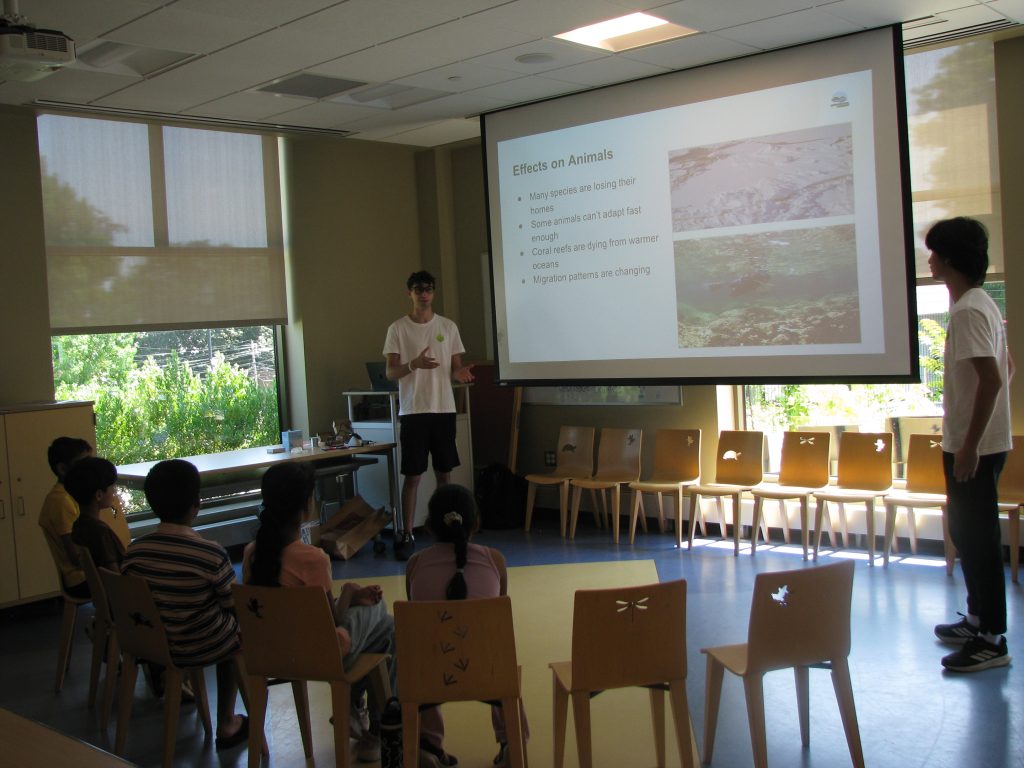
Why It's Everyone's Problem
We talked through what all of this actually means on the ground: melting glaciers, flooding coastlines, more droughts and wildfires, and animals losing their habitats faster than they can adapt — coral reefs dying in warmer oceans, migration patterns shifting. For people, it means more extreme heat waves, stronger storms, food and water shortages in some regions, and health problems from worsening air quality.
The point we kept coming back to: climate change affects everyone, everywhere, but small changes really do add up — and kids and teens can be some of the most powerful voices for pushing that change forward. Every action counts, no matter how small.
We gave everyone a minute to jot down their own answers to a few reflection questions — what's one thing they could change in their own routine, how could they get their family to go a little greener, what small habit might make a real difference. It's easy to feel like climate change is too big a problem for any one person to touch, but breaking it down into one small habit at a time makes it feel a lot more doable.
We also covered the two levels of action: the everyday stuff (turning off lights, walking or biking instead of driving alone, eating more plant-based meals, reducing/reusing/recycling) and the bigger swings (supporting renewable energy and clean energy projects, planting trees, and just talking to other people about what climate change actually is).
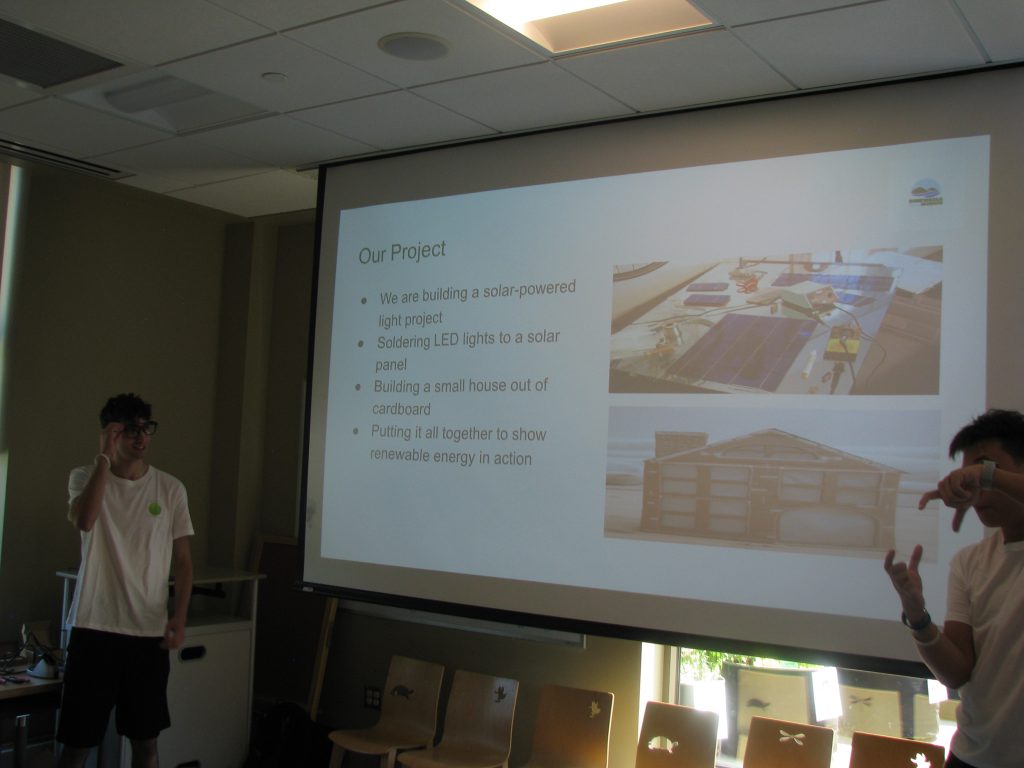
Then We Built Something
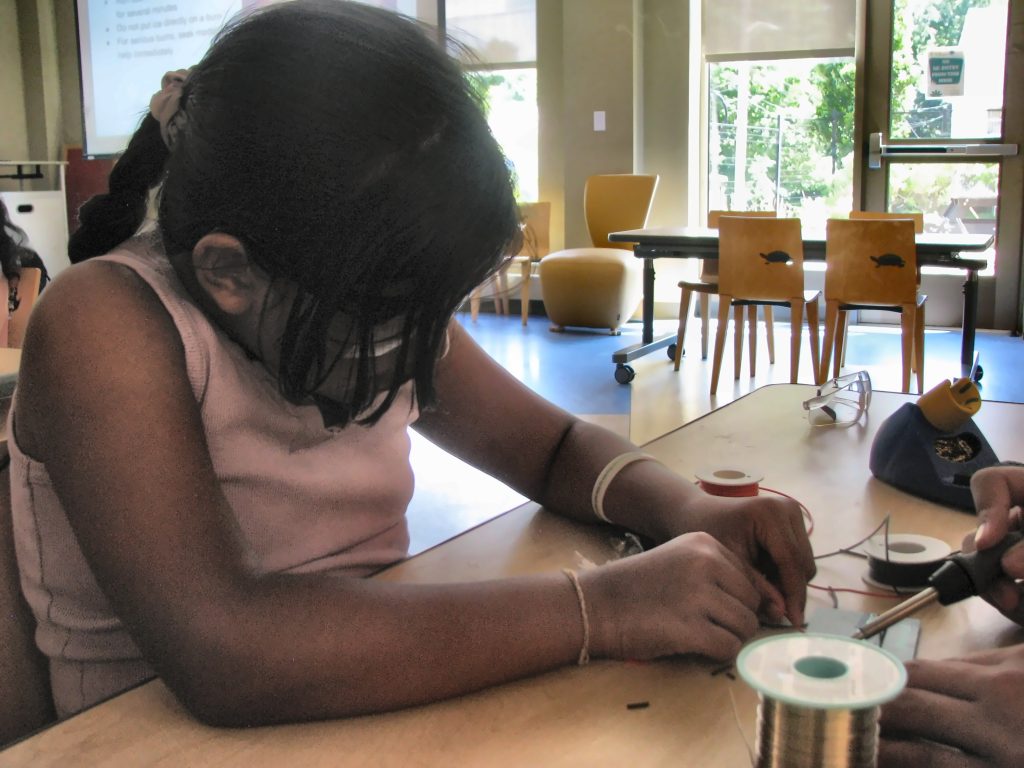
This was everyone's favorite part. We put the everyday-actions lesson into practice with a hands-on solar-powered light project: soldering LED lights directly onto a small solar panel, then building a little house out of cardboard to house it all. Watching the lights actually turn on once the panel was hooked up was a genuinely great moment — a tiny, physical example of renewable energy working right in front of us.
Before anyone picked up a soldering iron, we covered the basics: soldering joins metal parts using melted solder, the iron itself gets extremely hot, and you always work in a well-ventilated, clean, organized space. We were serious about safety — never touch the metal tip, never leave a hot iron unattended, keep it away from anything flammable, and let solder cool before touching it. Everyone knew what to do if they got a minor burn (cool water, no direct ice) and when to get an adult involved for anything serious. Safety glasses on, workstations set up, and everyone got to actually solder their own connections.
By the end of the session, we had a row of little cardboard houses lit up by solar-powered LEDs — a simple, hands-on way to see renewable energy click into place.
Thank You
A big thank you to our sponsor, Hakko, for making today's soldering work possible.
This was just workshop one, and it already showed exactly what we're going for: understanding the problem, and then actually building something toward the solution. More to come.